

When it comes to email marketing, it’s not just about sending emails; it’s about sending the right emails to the right people at the right time. In this era of digital marketing, where every click and conversion counts, understanding what truly resonates with your audience is crucial. This is where A/B testing, also known as split testing, comes into play. A/B testing is the secret sauce that can take your email marketing campaigns from good to exceptional. In this comprehensive guide, we’ll dive deep into the world of A/B testing for email marketing, exploring its significance, best practices, and how it can drive engagement and conversion rates.
Table of Contents
The Significance of A/B Testing
Email marketing is a powerful tool, but it’s only effective when your emails connect with your audience. A/B testing allows you to fine-tune your email campaigns to ensure they resonate with your subscriber list. Here are some key reasons why A/B testing is significant in email marketing.
Personalisation
A/B testing enables you to personalise your email content for different segments of your audience. By testing variations of your emails, you can identify which messages, subject lines, and content are more likely to engage specific groups of recipients.
Improved Engagement
Engagement is the lifeblood of email marketing. A/B testing helps you understand what type of content, visuals, or calls to action (CTAs) driver higher user engagement. This knowledge allows you to craft emails that your audience can’t resist clicking.
Higher Conversion Rates
The ultimate goal of email marketing is to convert subscribers into customers or advocates. Split testing can help you identify the elements that lead to higher conversion rates, be it a compelling offer, a well-placed CTA, or a specific email layout.
Data-Driven Decisions
A/B testing provides concrete data and insights. Rather than making decisions based on hunches or assumptions, you can rely on real data to guide your email marketing strategy. This data-driven approach often leads to better results.
Split Testing Best Practices
To make the most of A/B testing in your email marketing campaigns, follow these best practices:
Understand What to Test
Before you begin testing, have a clear idea of what you want to test. Start by looking at your analytics data or conducting customer interviews to determine which version or a message is most compelling. For example, test different subject lines, visuals, or CTAs to see what resonate best with your audience.
Create Two Versions
Craft two different versions of your email campaign, ensuring they maintain similar layouts and colours. The changes you make should be specific and testable. For example, if you’re testing the effectiveness of a subject line, keep everything else in the email the same, so you are comparing apples-to-apples.

Send Both Versions
Simultaneously send the two versions to separate segments of your email list. This ensures that external factors do no influence the results. By sending the emails at the same time, you can accurately gauge their impact.
Monitor Engagement
Keep a close watch on engagement metrics, including open rates, click-through rates, and conversion rates, for both versions. Use email marketing software or tools to track and collect data.
Analyse Results
Once you’ve collected sufficient data, analyse the results to determine which version outperformed the other. Pay attention to the metrics that matter most to your goals. For instance, if your aim is to boost click-through rates, focus on that data.
The Process for A/B Testing
Here are the steps involved in a successful A/B test in email marketing:
Understand What to Test: Identify the elements you want to test based on data or customer feedback. Determine what will resonate best with your audience.
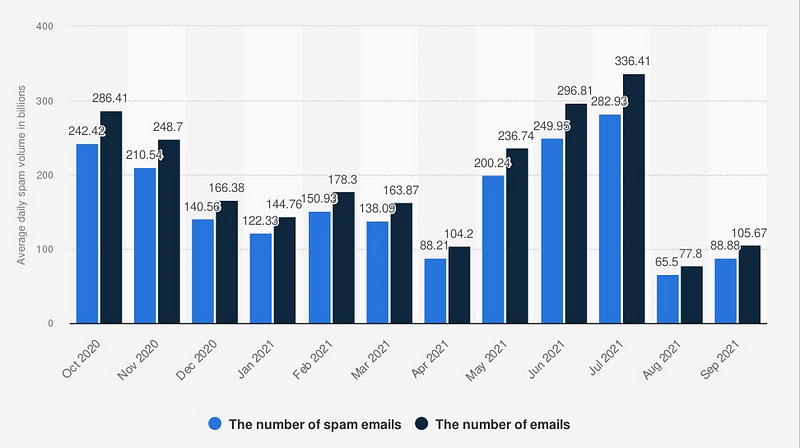
Steer Clear of Spam: A report from Statista.Com reveals that in the period between October 2020 and September 2021, global daily spam volume peaked in July 2021, with an astonishing 283 billion spam emails out of a total of 336.41 billion sent emails. Notably, the United States was the leading sender of these emails.
Create Two Versions: Craft two different versions of your email campaign, ensuring they maintain similar layouts and colours.
Send Both Versions: Simultaneously send the two versions to separate segments of your email list to prevent external factors from influencing results.
Monitor Engagement: Keep a close watch on engagement metrics, including open rates, click-through rates, and conversion rates, for both versions.
Analyse Results: Once you’ve collected sufficient data, analyse the results to determine which version outperformed the other. These insights will guide your future campaigns and help you refine your approach.
In conclusion, A/B testing is not just a valuable tool; it’s the compass that guides your email marketing campaigns to success. By systematically experimenting with different variables and analysing the results, you gain a deeper understanding of your audience’s preferences and behaviours. This knowledge empowers you to refine your email campaigns, boost engagement, and ultimately drive higher conversion rates. With A/B testing as your ally, your email marketing journey becomes an exciting and data-driven adventure. Start optimising your emails today and watch your campaign’s success soar. Please also see my blog on email marketing: Mastering Email Marketing in 2023: A Comprehensive Guide